Recent Recoveries
- $2,000,000Car crash — litigation settlement
- $1,750,000Slip & fall — litigation settlement
- $1,000,00018-wheeler — litigation settlement
- $850,000Tractor-trailer — litigation settlement
- $650,000Commercial collision — litigation settlement
- $650,000Trucking accident — litigation settlement
- $550,000On-the-job injury — litigation settlement
Prior results do not guarantee or predict a similar outcome in any future case. Every case is decided on its own facts.
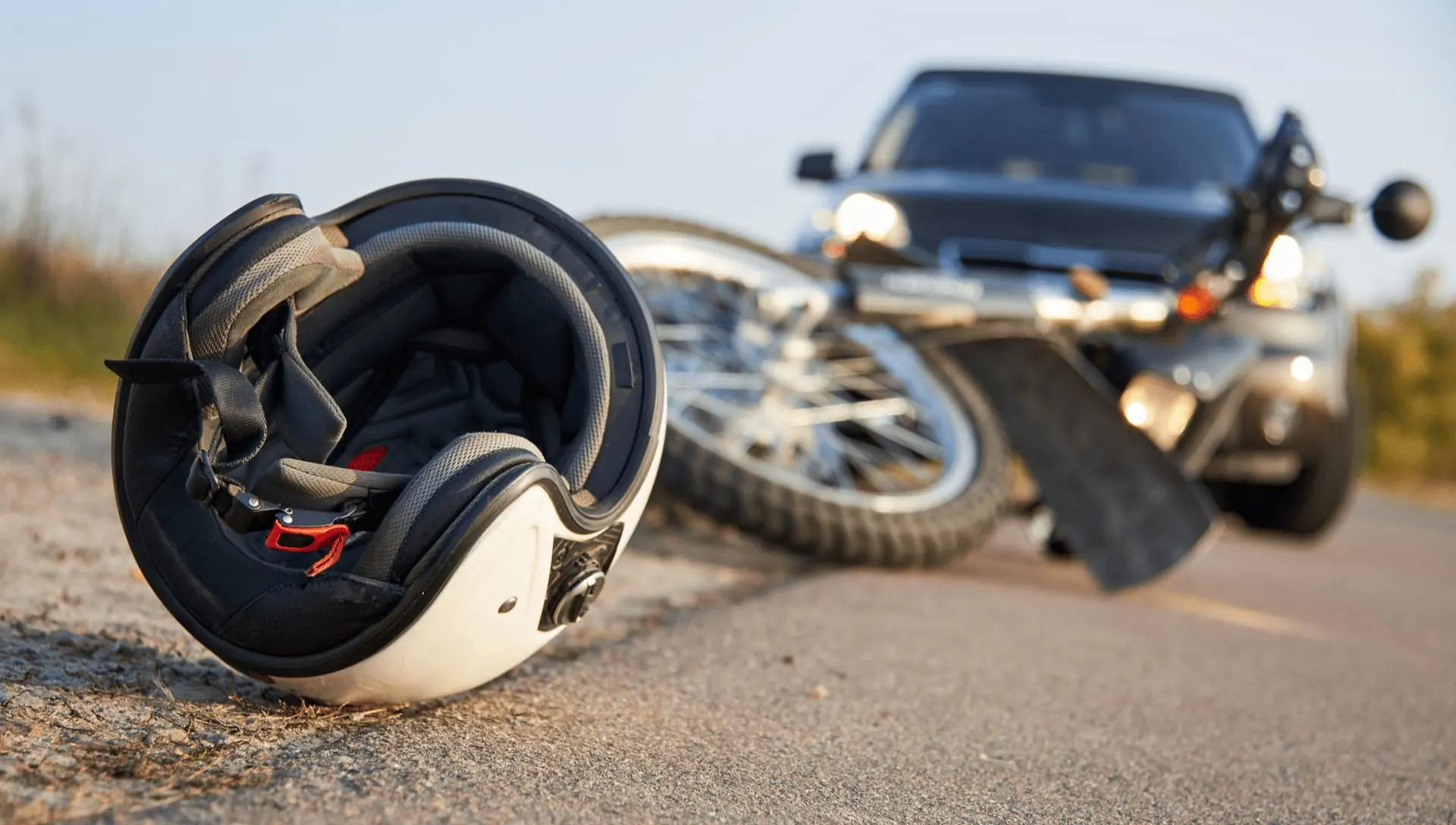
Anyone who has ridden knows how dangerous it is to share a lane line with cars and trucks that have not seen you. Riders get cut off, tailed too closely and pushed out of traffic by drivers looking at a phone.
That is unfair and it is dangerous, and when it goes wrong the rider is the one who pays for it. Crashes involving motorcycles are severe often enough that victims are left with amputations, spinal damage or a brain injury — and then left arguing about who was to blame.
The first week decides most of it. The adjuster rings while you are still on painkillers and asks for a recorded statement; someone wants to know whether to scrap the bike; the ER bill arrives before anyone has said who is paying it. None of that has to be handled by you, and almost none of it should be.
Free case review
You speak to the attorney who would try it, not to a screener.
No fee unless we win
Nothing up front, and the fee comes out of the recovery.
We know these roads
635, 75, the Tollway, Northwest Highway — and the courts around them.
Why It Matters
Why riders are treated differently
A motorcycle claim is not a car claim with a smaller vehicle in it. The injuries are worse, the insurer knows it, and so the fight moves to the one thing still arguable — whose fault it was.
Take a trip down U.S. 75 and you will see how much of the traffic is looking at a phone rather than the road. Motorcycles get cut off, tailed too closely and pushed out of a lane by drivers who never registered them. It is dangerous, and it is not the rider’s doing.
Insurance companies are in the business of paying out as little as they can, and on a motorcycle claim the cheapest lever is the oldest stereotype: that riders are speed demons who bring it on themselves. It gets pushed in the adjuster’s notes, in the recorded statement they ask you for, and in front of a jury if it gets that far.
Answering it takes evidence gathered early — the crash report, the scene, the damage to both machines — and a firm the other side knows will put it in front of a jury. That is the difference you are hiring.
The injuries in these cases are rarely the argument. What the insurer argues is that the rider caused it — and that argument is beaten with evidence, not with indignation.
Aaron Genthe · Founder
- 01
The stereotype arrives before you do
The file is opened on the assumption you were speeding, weaving or showing off. Nothing has to be proved for that to shape the first offer.
- 02
Severe injuries make them fight liability
There is no crumple zone, so the medical bills are rarely arguable. What an insurer argues instead is that you caused it.
- 03
Every point of blame is money
Under Texas comparative fault, blame shifted onto the rider comes straight off the recovery — which is what makes the stereotype pay.
How They Happen
The four ways riders are hit
Motorcycle collisions are not random. Four patterns account for most of what comes through this office, and each one is proved a different way.
- 01Left turns across your laneThe single most common way a rider is hurt: a driver turning left misjudges the speed of an oncoming bike, or never registers it at all.
- 02Lane changes and blind spotsA motorcycle occupies a fraction of a lane and disappears in a mirror. Merges on 635 and the Tollway put riders on the shoulder or under a wheel.
- 03Rear-ended in stopped trafficStruck from behind at a light or in a queue — the crash where the rider has the least warning and the least to absorb it.
- 04Impaired and distracted driversAlcohol, drugs and a phone in the lap. The most preventable crashes on the road, and the ones juries treat least kindly.
Injuries
What these crashes do to a rider
A motorcycle offers no cage, no airbag and no seatbelt. The injuries below are the ones that decide what a claim is worth, and every one of them is treated over months rather than days.
Road rash and burns
Sliding contact with pavement strips skin to the fat or the bone, and contact with an exhaust or a fuel fire burns deeper still.
Orthopaedic injury and limb loss
Legs, feet, hands and pelvis take the impact and then take the weight of the bike.
Spinal damage and paralysis
Fractures and disc injury through the neck and lower back, up to complete or partial paralysis.
Head injury and traumatic brain injury
A helmet reduces the risk of a skull fracture. It does not stop the brain moving inside it.
Internal and organ damage
Bleeding, ruptured organs and nerve damage that are not visible at the scene and are sometimes not symptomatic on the day. It is the reason to be examined even when you walk away.
Case Value
What your claim can actually include
“What is my case worth?” is the first question on almost every call, and no honest answer comes before the treatment is understood.
Economic losses
The half of the claim that is proved with paper. Keep the bills, the receipts and the pay stubs, including the gear.
Medical treatment
Ambulance, ER, imaging, surgery, hardware and the rehabilitation still ahead of you — motorcycle injuries are treated for longer than almost any other kind.
Lost income
The weeks you could not work, and the shifts you will lose to appointments and surgeries months from now.
Lost earning capacity
Where a hand, a leg or a back injury means you cannot return to the trade you had, or cannot do it for as many years.
The motorcycle and your gear
Repair or replacement of the bike, and of the helmet, leathers, boots and gloves it destroyed. Gear is routinely left out of a first offer and is routinely worth four figures.
Out-of-pocket costs
Prescriptions, braces and mobility equipment, mileage to treatment, and the help at home you had to pay someone for.
Non-economic losses
The half an adjuster leaves out of a first offer because no invoice arrives for it. It is argued rather than added up, and on a motorcycle claim it is usually the larger half.
Pain and suffering
The physical toll of the injury and of the treatment it took to put right, over the months it actually took.
Disfigurement
Scarring, grafts and visible injury, valued separately from the surgery that caused or repaired them.
Physical impairment
What you can no longer do — lift, kneel, grip, or get back on a bike at all.
Mental anguish
Sleeplessness, flashbacks at intersections, and the anxiety that keeps a rider off the road long after the injury has healed.
Loss of consortium
A claim belonging to a spouse or a parent, for what a catastrophic injury took out of the relationship.
Texas Law
The four rules that decide a rider’s claim
Even when the crash was plainly the driver’s fault, Texas law shapes what you recover. These four decide most of it, and the first is the one riders most often get wrong.
Riding without a helmet does not bar your claim
You can recover from a negligent driver whether or not you were wearing a helmet.
Blame is divided, and the split is the case
Texas is a modified comparative fault state. You recover as long as you are less than 51% at fault, and whatever share is assigned to you comes off the award.
You have two years, and rather less in practice
Most Texas injury claims must be filed within two years of the crash. Claims against a government vehicle, and claims brought after a death or on behalf of a minor, run to different clocks.
What raises the number, and what lowers it
The same crash is worth different amounts depending on what can be proved about it. These are the factors that move it:
The Process
What happens when you call us
If you have never worked with a lawyer before you may feel overwhelmed, or a little suspicious.
- 01
Free case review
You call or message us. We ask what happened, where, and what you are dealing with now.
- 02
We take over the paperwork
We notify the insurers, take every call from then on, and start collecting the crash report, the medical records and the scene evidence.
- 03
We preserve the bike
Before it is scrapped or repaired. The damage to the motorcycle is often the clearest proof of how the collision actually happened.
- 04
We build and negotiate
We value the whole claim — future care, impairment, the gear — then push the adjuster. If they will not play fair, we file suit.
- 05
You get paid
We walk you through the settlement line by line. You will never be left wondering what just happened to your case.
Client Reviews
What our clients say about us
Every review below was left on Google by someone the firm represented after they were hurt by another driver, and is published as they wrote it.
Rated five out of five stars
“Genthe Law Firm is the absolute best!!! The attorney that handled my case was Aaron, he is great! They handled the case quickly, had my best interest at heart, cared about my injuries and issues I encountered due to my accident, and kept me updated with each step!”
Skylar Latimore
Rated five out of five stars
“I was injured in a car accident and was not sure what to do… They investigated the accident, gathered evidence, and negotiated with the insurance company… They were able to get me a settlement that exceeded my expectations.”
Rick Rye
Rated five out of five stars
“I want to thank Aaron and his team for the great professional service. They got me and my daughter a really great settlement for our injuries. Always kept in touch updating us on our case.”
Ally M
Your Attorney
The lawyer who works your case
This page has promised you a real attorney rather than a call centre several times over. It is only fair to say who that is.

Founder · Trial Attorney
Aaron Genthe
A Texas A&M graduate who went into personal injury straight out of law school, Aaron spent years as a litigator at one of the larger firms in Dallas — long enough to build a reputation as an aggressive and effective attorney, and long enough to watch how easily a client becomes a file number at a firm that size.
He started Genthe Law Firm so that the person you speak to about your crash is the person who tries it. He has litigated collision cases in courts across Dallas County and North Texas since, including the ones where a rider was blamed for being on a bike.
- Practising since
- 2015
- Cases handled
- Hundreds, in Dallas and across Texas
- Education
- Texas A&M graduate
- Fee
- Contingency — nothing unless you recover
Questions
Motorcycle accident FAQs
The questions riders ask on the first call, answered the way we answer them on the phone.
Can I still recover if I was not wearing a helmet?
Yes. Texas Transportation Code §661.003 says the absence of a helmet is not admissible to prove negligence and cannot be used to reduce what you recover.
What can I be compensated for after a motorcycle accident in Dallas?
Medical costs already incurred and still ahead of you, wages lost and future earning capacity, the motorcycle and the riding gear, and non-economic losses — pain, mental anguish, disfigurement and physical impairment.
Do I have to report a motorcycle accident to the Dallas police?
You should report any crash involving injury, death, or property damage over $1,000 — anywhere in Texas, Dallas included. Below that threshold with no injuries a report is not required, but it is still worth making: the crash report is the first document every insurer reads.
Who is liable for a motorcycle accident?
It depends on what the evidence shows. Witnesses, the crash report and the physical damage to both vehicles establish who was negligent, and more than one party can share it — a driver, an employer, or the authority responsible for a hazard in the roadway.
How much does a Dallas motorcycle accident lawyer cost?
Nothing up front. We work on contingency: the fee comes out of the settlement or verdict, and if there is no recovery there is no fee.
How long do I have to file a motorcycle accident claim in Texas?
Two years from the date of the crash in most cases. Claims involving a government vehicle, a death, or an injured minor can run to a different deadline, and it is worth ringing early either way — the evidence goes long before the deadline does.
What if the driver who hit me had no insurance?
You may still have a claim. Most Texas policies carry uninsured/underinsured motorist coverage that pays when the driver at fault cannot.
Will my case have to go to trial?
Most do not. But insurers settle differently with a firm that tries cases than with one that does not, and they keep a record of which is which.
Also Handled Here
If your crash was something else
These are the neighbouring claims the firm litigates most often, and the North Texas city with a motorcycle page of its own.
- 01Garland Motorcycle AccidentsRiders hurt in northeast Dallas County
- 02Car AccidentsThe driver who pulled out on you
- 03Truck Accidents18-wheelers, tankers and trailers
- 04Wrongful DeathClaims brought by a surviving family
- 05Traumatic Brain InjuryHead injury under a helmet
- 06Bicycle AccidentsCyclists struck on Texas roads
- 07Pedestrian AccidentsCrosswalk and parking-lot strikes
- 08Uber & RideshareRideshare insurance layers untangled
Read more on riding in Texas
- Motorcycle Laws in TexasLicensing, helmets and equipment
- Top 4 Causes of Motorcycle AccidentsWhat the crash reports show
- What To Do After a Motorcycle AccidentThe order to do it in
- Rear-Ended While Lane Splitting in Texas?Where the fault lands
- Motorcycle vs. Car Accidents: Legal DifferencesWhy the claims are not the same
- Watch What You Say — And What You PostSocial media in an injury claim
- Can I Sue If My Loved One Died in a Crash?Who may bring the claim
- Safest Motorcycle HelmetsRatings and what they measure
- Reducing the Risk of a Devastating CrashGear, visibility and positioning
- Tips for Avoiding Motorcycle AccidentsDefensive riding in traffic