
Save Proof That Supports Your Pedestrian Claim
A Dallas pedestrian accident lawyer can investigate the walking route, driver’s movement and independent evidence when the injured person could not give an early account. Genthe connects the crossing and visibility facts with medical restrictions, mobility needs and lost work.
Jump to the FAQs. Our intake team answers 24/7 and arranges attorney follow-up.
Recent Recoveries
- $2,000,000Car crash — litigation settlement
- $1,750,000Slip & fall — litigation settlement
- $1,000,00018-wheeler — litigation settlement
- $850,000Tractor-trailer — litigation settlement
- $650,000Commercial collision — litigation settlement
- $650,000Trucking accident — litigation settlement
- $550,000On-the-job injury — litigation settlement
Prior results do not guarantee or predict a similar outcome in any future case. Every case is decided on its own facts.
Client Reviews
What our clients say about us
Selected reviews reproduced as written and attributed to their authors. Individual experiences and prior results do not guarantee an outcome.
Rated five out of five stars
“Upon getting ran over by car in a crosswalk, Aaron was one of my first phone calls. He knew what therapy and doctors I needed… cared about my physical pain and agony… and treated me like an individual, not just a case.”
Adrianne Miller
Rated five out of five stars
“I was badly injured. Broken knee. Broken ankle. Severe head and neck trauma. I called several attorneys for help. No one returned my calls… He made sure I had the best specialists that covered every medical issue that I required.”
Tracy Fortner
Rated five out of five stars
“This was my first experience with the legal system, and was even more daunting as we were going before a jury. Aaron was patient and had a calm demeanor; but a tenacious work ethic and court presence.”
Vu Nguyen
Your Attorney
The lawyer who works your case
Meet Aaron Genthe, founder of Genthe Law Firm, who represents injured people in Dallas and throughout Texas.

Founder · Trial Attorney
Aaron Genthe
A Texas A&M graduate who went into personal injury straight out of law school, Aaron spent years as a litigator at one of the larger firms in Dallas — long enough to build a reputation as an aggressive and effective attorney, and long enough to watch how easily a client becomes a file number at a firm that size.
He started Genthe Law Firm so that the person you speak to about your case is the person who tries it. He has litigated collision cases across Dallas County and North Texas since, including the ones where the injured person was the only one at the scene who could not give an account of it.
- Practicing since
- 2015
- Education
- Texas A&M graduate
- Fee
- Contingency — nothing unless you recover
Representation built around your case
Get Aggressive Lawyers for Your Pedestrian Claim
A Dallas pedestrian accident lawyer should examine the crossing and vehicle movement even when the injured person could not give a statement at the scene.
01 · Individual case strategy
Your Crash Gets More Than Driver Assumptions
An injured pedestrian deserves a case built from all available evidence.
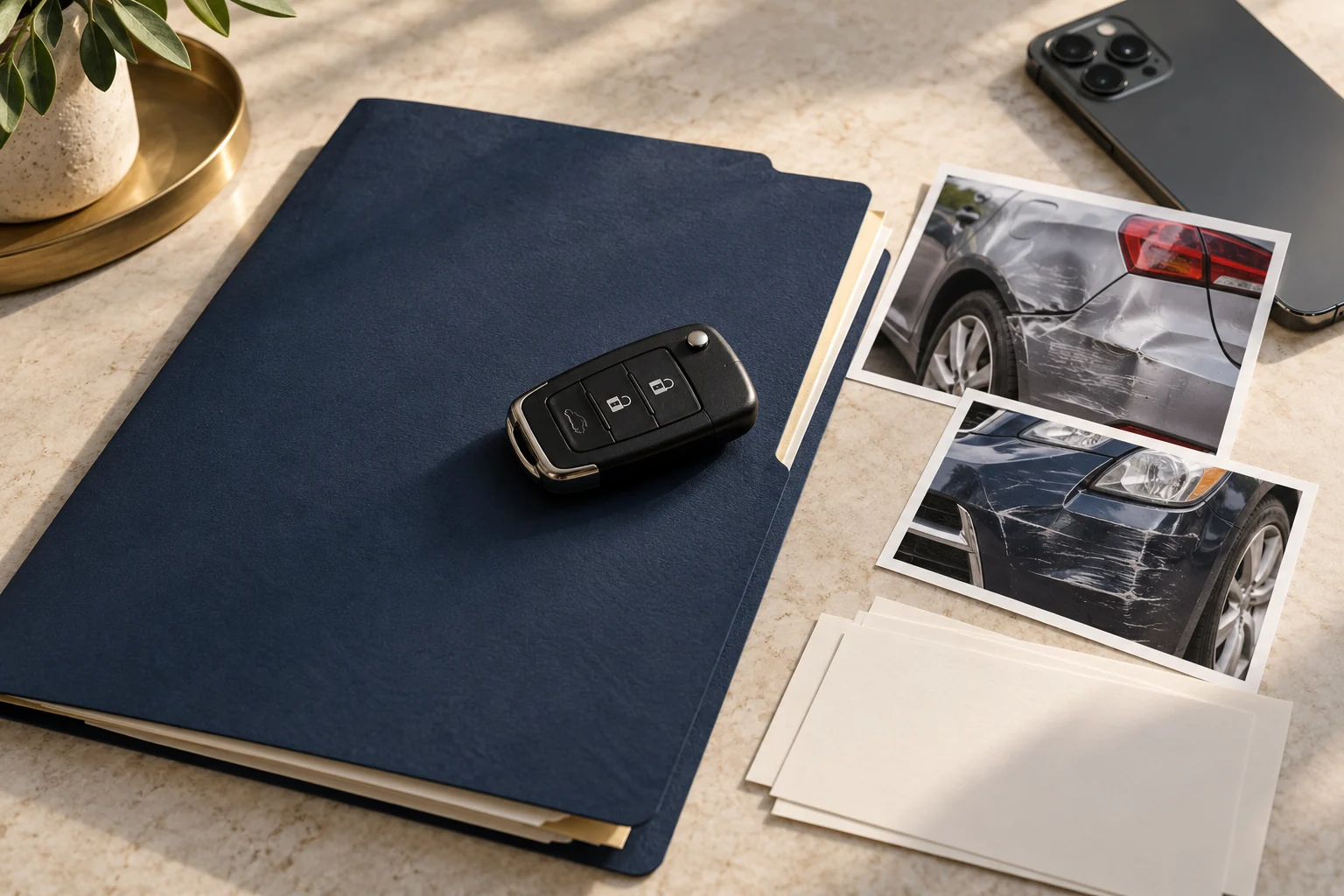
We examine the walking path, controls, visibility and independent observations while developing the treatment and financial effects. The investigation is specific to the collision. Your claim should not be pushed toward a quick resolution simply because the driver was able to give the earliest statement.
02 · Attorney-led representation
Your Attorney Answers Your Recovery Questions
You do not need to reconstruct the entire crossing before asking for help.
Your attorney evaluates the available accounts, identifies the unresolved questions and explains requests from insurers. Paralegals help obtain and organize the material while the lawyer leads the legal analysis. That keeps your recovery and the pedestrian’s perspective connected with the claim strategy.
Meet the Genthe team
03 · Trial-ready advocacy
We Prepare for Trial to Fight Underpayment
Settlement leverage grows from proof of the movement and the loss.
We prepare the scene, witness and injury evidence for potential litigation, rather than rely on an unsupported description of who should have seen whom. Genthe’s willingness to take a disputed case to court gives negotiations a firmer basis for pursuing the value the claim supports.
We examine signal timing, positions, the report and independent observations alongside work and mobility losses. The consultation is free, and written representation terms come before you hire us.
Why It Matters
Protect Your Claim After a Pedestrian Crash
The injured pedestrian may be unable to give an immediate account. Independent recordings, vehicle damage and witnesses can help test the driver’s version rather than accept it as the final word.
A collision that costs a driver a fender costs a person on foot a pelvis. Everybody understands that part, and it is the part nobody argues about.
What people do not expect is what happens next. The driver stayed upright, stayed on scene and gave the responding officer their account while you were being loaded into the back of something. That account goes into the crash report, the report is the first document every adjuster reads, and from that moment the file contains a version of events that nobody asked you about — frequently one you would not be able to contradict, because you do not remember the minute before.
Undoing that takes evidence nobody kept for you: the damage to the car, the marks on the road, the cameras along the street, the phone on the passenger seat. It has to be asked for in the first days, and it has to be asked for by somebody the other side knows will put all of it in front of a jury.
Nobody disputes who is in the hospital. What gets disputed is whether they were entitled to be in the road — and that is answered with the car, the cameras and the pavement, not with anybody’s memory.
Aaron Genthe · Founder
- 01
You are the one who cannot give a statement
The driver stayed upright, stayed on scene and told the responding officer what happened. You were on the pavement, or in the back of an ambulance.
- 02
You arrived with nothing that recorded it
No car, no black box, no dashcam, no helmet camera. The proof is the driver’s vehicle, the driver’s phone, the marks on the road and the cameras on the buildings — every one of them in somebody else’s hands.
- 03
“They stepped out in front of me”
Dark clothes. No crosswalk. On a phone. The standard answer is an argument about the person who was walking, not about the driving — and in Texas every point of it comes off the recovery.
Texas Law
Texas Pedestrian Accident Laws and Filing Deadlines
Even where the crash was plainly the driver’s doing, Texas law shapes what you recover. These five decide most of it, and the first is where the whole fight happens.
Blame is divided, and the split is the case
Texas is a modified comparative fault state. Civil Practice and Remedies Code §33.001 lets you recover unless your own share of responsibility is greater than 50%, and whatever share is assigned to you comes off the award.
For example, a $600,000 award reduced by 30% responsibility becomes $420,000 before fees, expenses and other adjustments. Responsibility greater than 50% bars a Chapter 33 recovery. Fault must be supported by the evidence, not assumed from the severity of injury.
Crossing outside a crosswalk is not the end of it
Transportation Code §552.005 generally requires a pedestrian crossing outside a marked crosswalk or an unmarked crosswalk at an intersection to yield. It also restricts crossing between adjacent signal-controlled intersections. Section 552.008 separately requires drivers to use due care to avoid a pedestrian collision. The crossing location and controls matter to each person’s duties.
Crossing outside a crosswalk does not automatically decide the entire civil claim. The evidence and comparative-responsibility rules still need review.
Visibility and speed require evidence
Texas does not impose a general pedestrian clothing-color requirement. Visibility can still be relevant to what the parties reasonably could see and do. Section 545.351 requires reasonable and prudent speed under existing conditions, while §552.008 requires driver due care.
Photographs, lighting, sightlines and the vehicle’s approach can help assess these issues. Dark clothing neither automatically defeats the claim nor proves the driver was negligent.
Drivers must stop and provide reasonable assistance
Sections 550.021 and 550.023 impose stopping and assistance duties after an injury or fatal collision. Violations can carry serious criminal penalties depending on the facts. A civil injury claim remains separate from a prosecution.
The criminal case is not your case, and it is not a substitute for one. A prosecution recovers nothing for the person in the hospital, and it can take a year of its own before it decides anything.
Two years, and a great deal less in practice
CPRC §16.003 generally sets two years for an ordinary personal-injury claim. Minority or qualifying disability may affect limitations under §16.001. A legally permitted government tort claim can require notice under §101.101, generally within six months and sometimes earlier under a city charter. Wrongful death has a separate accrual analysis.
The filing deadline is not the pressure. The car is repaired, the shop footage overwrites, the marks on the road wash away and the witness who stopped stops answering. The two-year bar is the last of those to run out, not the first.
Save Your Route to Help Prove Fault
Sketch the actual walking route
Mark your starting curb, entrance or walking area, intended destination and direction. Identify the crosswalk, signal, driveway or parking-lot movement and which control you could see. Keep impact location separate from where the person or vehicle finally stopped.
Describe visibility and the vehicle
Save wide photographs showing approaches, lighting, obstructions, the turn and damage. Clothing color or a claim that someone appeared suddenly does not settle reasonable driving. A street name or crosswalk location alone cannot explain every movement.
Identify independent views
Keep witnesses’ contacts and what they saw: approach, impact or aftermath. Preserve original recordings. List possible cameras and who controls them, but label footage unconfirmed until its existence is established. Neither participant’s account should be assumed complete.
Document mobility and possible coverage
Bring care, restrictions, missed work, travel needs and changes in daily activities. Review driver, employer and personal policies against their actual terms. A hit-and-run does not automatically establish coverage. Responsibility questions are explained in the Texas-law section; a “jaywalking” label alone decides neither duties nor recovery.
Questions for your consultation
Ask what could establish your route and which driver, property and coverage questions need separate review. A sketch may contain unknowns. You do not need footage or a complete witness list to inquire.
The Process
What happens when you call us
- 01
Identify the crossing movement
Record the pedestrian’s direction, intended destination and last remembered position. Keep the source of each detail clear when someone else supplies the account.
- 02
Map the vehicle’s approach
Compare the turn or travel path with the point of contact and damage photographs. Examine which observations concern the moments before impact.
- 03
Find the independent record
Locate the police reference, witness contacts and any available recording. Preserve original files and identify who holds them.
- 04
Connect injury and daily impact
Organize treatment records, mobility restrictions, care needs and work information. Document what changed without assuming the medical outcome is already known.
- 05
Review responsibility and resolution
Assess the competing accounts, policy issues and documented losses before a settlement decision. Explain disputed facts rather than reducing the case to an assumption about who should have seen whom.
Across North Texas
Pedestrian accident cases across Dallas–Fort Worth
Where you were struck decides who is responsible, and which county hears the case.
We represent people struck while walking in Dallas, Fort Worth, Plano, Irving, Arlington, Garland and the cities around them: in crosswalks, at DART and Trinity Metro stops, in parking lots and along the frontage roads, across Dallas, Collin, Denton and Tarrant counties.
A pedestrian accident case can usually be filed in the county where the crash happened. Our office is on Coit Road in North Dallas, and we meet clients wherever is easiest for them.
Pedestrian accident FAQs
The driver says I stepped out in front of them.
They almost always do, and they said it first, to the officer, while you were being treated. It is an argument rather than a finding, and it is answered with the things that do not have a version of events — the damage to the vehicle, where it came to rest, the marks on the road, the street cameras and the driver’s phone.
Can I still recover if I was partly at fault?
Yes, unless your share is greater than 50%. Texas applies modified comparative fault and your percentage is deducted from the award — awarded $600,000 and found 30% responsible, you receive $420,000.
How long do I have to file a pedestrian accident claim in Texas?
Two years from the date you were struck, in most cases.
What does a Dallas pedestrian accident lawyer cost?
Nothing up front. We work on contingency: the fee comes out of the settlement or the verdict, and if there is no recovery there is no fee.
Do you handle pedestrian accident cases outside Dallas?
Yes. We are based in North Dallas and handle pedestrian accident cases across Dallas, Collin, Denton and Tarrant counties, including Plano, Frisco, Richardson, Garland, Irving, Arlington and Fort Worth, and elsewhere in Texas when we can help.
What if I was taken away before speaking with police?
Tell the attorney which parts you remember and which were supplied later by someone else. The report, witnesses, vehicle damage and any available recording may help fill the factual gaps. Avoid adopting a complete narrative simply because it is the first one an insurer sends you.
Why does the exact crossing position matter?
The applicable traffic controls and each person’s movements can depend on the location. Photographs and accurate measurements may help distinguish the approach, contact point and final resting position. A legal assessment should use those facts rather than assume every pedestrian collision presents the same right-of-way question.
Which Dallas crossing details should I identify first?
Record the street, cross street, crosswalk or walking route, direction and signal you actually observed. Distinguish the point of contact from the place you were helped or where the vehicle stopped.
What if I was hit while entering a driveway or parking-lot entrance?
Describe the walking path and vehicle turn rather than calling the event simply a street crossing. Entrances and exits can create different sight-line and control questions from a signalized intersection.
Can a bus stop location explain why I was on the roadway?
It may provide context for the route you took. Preserve the exact stop and walking movement, but do not assume the stop’s presence decides duties or fault in the collision.
How should I document poor nighttime visibility?
Keep existing scene images, lighting locations, clothing information and witness descriptions. Do not recreate the crossing in traffic; later photographs need their date and conditions identified to avoid implying an exact match.
What if the driver says I came from behind a parked vehicle?
Record the actual positions and any obstruction evidence. That explanation must be compared with sight lines, movements and other accounts; it should not automatically replace your own limited or incomplete recollection.
Can Dallas Police Records provide the same material as TxDOT?
Not necessarily. TxDOT maintains the state crash report, while other investigative records may be held by police. Identify the specific photograph, recording or document and confirm the proper custodian and release rules.
Should I preserve the shoes or clothing worn during the impact?
Ask about relevant preservation, particularly where contact, visibility or a fall is disputed. Keep items safely identified with photographs rather than cleaning or discarding them before their evidentiary value is considered.
Does an ambulance trip establish all pedestrian injury damages?
It documents one part of the response and treatment. Follow-up care, restrictions, work effects and practical needs require their own records; the seriousness of the initial transport does not value the entire claim.
What if I cannot identify the vehicle that struck me?
Give police the description and keep witness or camera leads. Bring any potentially relevant insurance documents for review; identification and possible first-party coverage are separate inquiries with no guaranteed outcome.
How can Genthe assess a pedestrian account with a memory gap?
The firm can compare independent records, witness perspectives and physical evidence while keeping the gap acknowledged. An uncertain moment should not be filled with an insurer’s assumption simply to create a complete story.