Recent Recoveries
- $2,000,000Car crash — litigation settlement
- $1,750,000Slip & fall — litigation settlement
- $1,000,00018-wheeler — litigation settlement
- $850,000Tractor-trailer — litigation settlement
- $650,000Commercial collision — litigation settlement
- $650,000Trucking accident — litigation settlement
- $550,000On-the-job injury — litigation settlement
Prior results do not guarantee or predict a similar outcome in any future case. Every case is decided on its own facts.
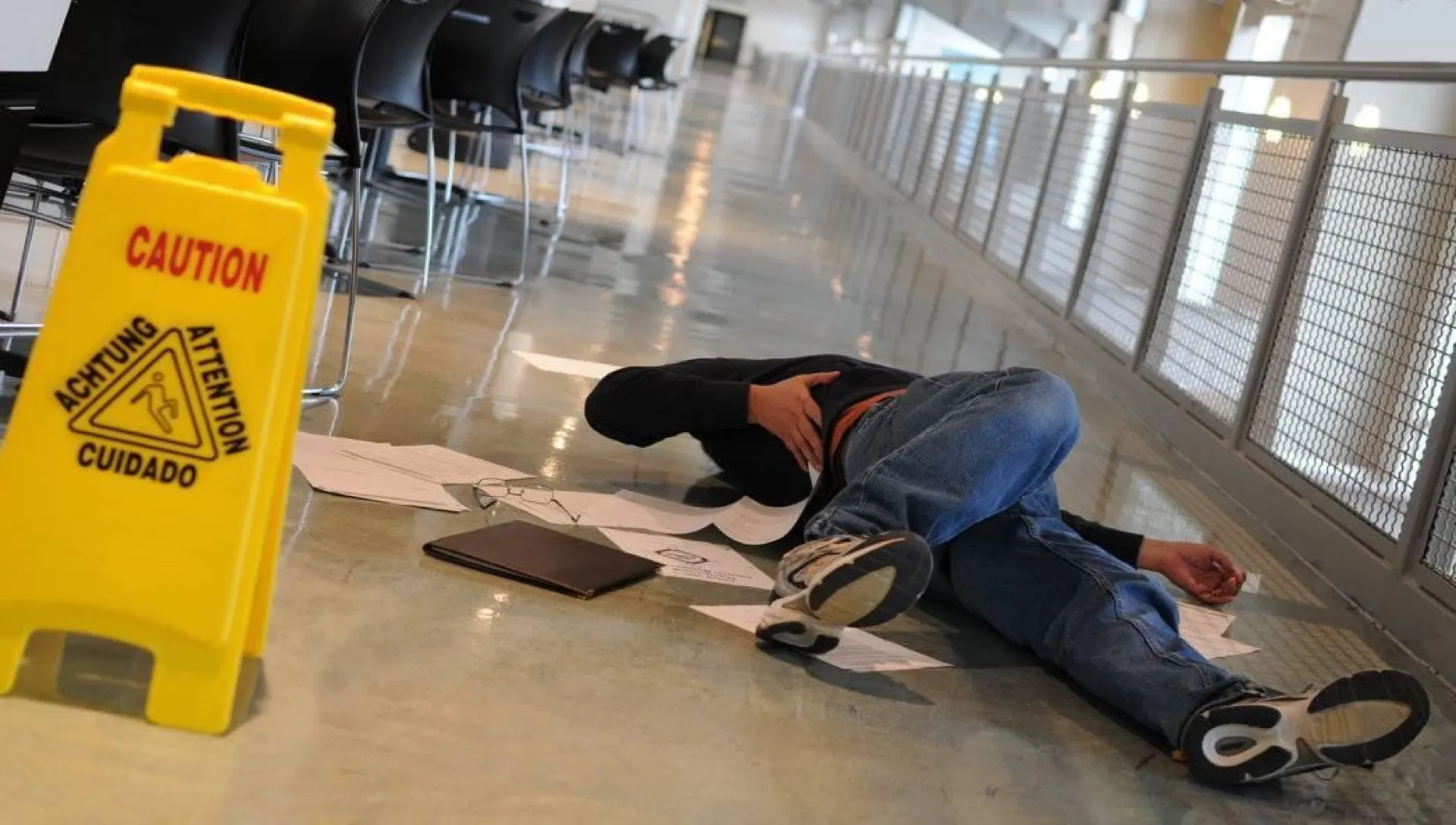
It is the accident nobody takes seriously until it happens to them. You go into a Dallas store you have been into a hundred times, your foot goes out from under you on something you never saw, and you are on the floor in front of strangers wanting nothing more than to get up and leave.
So most people do exactly that. They say they are fine, they decline the ambulance, they do not ask for the incident report, and they find out the following morning that a wrist, a hip or a shoulder is not fine at all.
By then the floor has been mopped, the sign has been put away, the witnesses have driven home and the camera that watched all of it is counting down to the day it records over itself. Everything below is about that gap, and about how we close it for people hurt in falls across Dallas–Fort Worth.
The clock is the case
Store video overwrites itself on a loop — often within thirty days, sometimes within a week. Almost everything that proves who knew about the hazard is gone by then.
You pay nothing to ask
The consultation is free, the fee comes out of the recovery, and there is no bill if we do not win.
Two years, and far less than that against a city
Two years to file in most Texas cases. Six months’ written notice, or less, if you fell on public property.
Where It Starts
How we win Dallas slip and fall cases
Everybody assumes the argument is about whether the floor was dangerous. It is not. In Texas the fight is over whether the owner knew — or had been given long enough to find out — and that is proved with a clock, not with a puddle.
You fell because the floor was wet. That much is not usually in dispute, and it is not usually what the case turns on either.
What a Texas court asks is a narrower question: did the store know that liquid was there, or had it been there long enough that anyone doing a reasonable job of looking would have found it? That is the element — notice — and it belongs to you to prove, not to them to disprove.
Which is why so many of these claims end before anybody reads a medical record. The store files a motion saying there is no evidence of how long the spill had been on the floor, and unless somebody went and got that evidence in the first few weeks, there is not. The injury was never the problem. The clock was.
People call us six months later with a surgery, a stack of bills and a photograph of nothing at all. The case was winnable in week one and it was over by week five, and nobody had told them.
Aaron Genthe · Founder
- 01
We go after the log, not the puddle
The sweep sheet, the inspection record and the maintenance ticket are what prove the store knew. They are also what nobody hands over voluntarily.
- 02
We write before we sue
A preservation letter goes out the day we are hired, naming the camera angles and the dates. After Brookshire Brothers that letter is the difference between having the video and arguing about why it is gone.
- 03
We answer the “you should have seen it” case
Open and obvious is the defense that wins these outright, and it is answered with facts about the floor, the lighting and what you were reasonably doing — gathered early, or not at all.
The Test
What you must prove in a Texas slip and fall claim
Four elements, and one of them does nearly all the work. Read the second and third entries against your own fall — that is the question a judge will be asked first.
The four things you have to prove
A Texas premises case brought by a customer has four elements, and they are proved in this order.
Actual knowledge — somebody knew
Someone who worked there created the hazard, saw it, or was told about it. A customer who reported the spill twenty minutes earlier.
Constructive knowledge — it had been there long enough
Where nobody admits to knowing, Texas asks a question about time. The rule from Wal-Mart Stores, Inc. v. Reece is that you must show the condition existed long enough to give the owner a reasonable opportunity to discover it.
The owner made the hazard itself
Where the condition was created by the business — a floor just waxed, a display stacked so it sheds, a mat that curls, a downspout emptying across the walkway to the door — the notice question largely falls away.
Duty
Invitee, licensee or trespasser: what the owner owed you
The same fall on the same floor produces three different legal tests depending on why you were on the property — and a fourth if the property belongs to a public body.
Invitee — you were there for their benefit
Customers, tenants, hotel guests, delivery drivers, people at a business during opening hours. This is the highest duty Texas recognizes: the owner must inspect for hazards and make safe or warn about the ones it knows about or should have found.
Licensee — you were there for your own
Social guests are the usual example. A friend at a barbecue, someone calling round. The owner owes no duty to inspect at all.
Trespasser
The lowest duty. Do not injure them willfully, wantonly or through gross negligence. Children are the significant exception, under the attractive nuisance doctrine — an unfenced pool, an open excavation, machinery left accessible.
A city, a county, the State or a school district
This is the trap. Under the Texas Tort Claims Act a governmental unit owes a premises-defect claimant only the duty owed to a licensee — actual knowledge only — unless you paid for the use of the premises.
Where It Happens
Where Dallas slip and fall accidents happen
Across Dallas–Fort Worth, each is a different defendant with different records, kept for different lengths of time. Where you fell decides what proves it — and, on public ground, how long you have.
- 01Grocery stores and supermarketsProduce misters, freezer condensation, a dropped jar, a leaking case. The sweep log is the case, and the good ones are kept to the minute.
- 02Big-box retailersWide aisles, thin staffing and a lot of camera coverage. These defendants have practiced claims departments and an incident-report process running before you are back on your feet.
- 03Restaurants and barsKitchen runoff at the pass, grease tracked into the dining room, a sanitizer bucket, an unlit step down to the patio.
- 04Apartment complexes and rentalsStairwells, breezeways, loose handrails, dead lighting and pooling by the laundry. The work-order history usually shows the landlord had been told.
- 05Hotels, resorts and short-term rentalsLobby marble in the rain, bathtubs without a mat, pool decks, and the question of who the operator actually is behind the brand on the sign.
- 06Parking lots, curbs and entrancesWheel stops, potholes, unmarked level changes, missing bollard lighting. Often owned by a landlord and maintained by somebody else entirely.
- 07Public sidewalks and city propertyHeaved slabs, open water-meter boxes, unbarricaded works. A governmental defendant, a licensee-level duty and a six-month notice clock.
- 08Stadiums, fairs and event groundsSpilled drinks on concourse concrete, temporary cabling, unlit steps in raked seating, and a stack of contractors between you and whoever is responsible.
The Defense
How stores and insurers fight slip and fall claims
Six arguments, in roughly the order you will meet them. The first is the one that ends cases outright; the last one you will hear is the one that is not a defense at all.
“It was open and obvious”
The strongest defense there is, and it is not a jury argument — it is a no-duty argument made to the judge.
“There was a wet floor sign”
A sign is evidence of a warning, not proof of one. The questions are when it went out, whether it was where the hazard was, whether it was visible from the direction you were walking, and whether it was still standing.
“You cannot prove how long it was there”
Not a defense so much as the shape of the whole fight, and the one raised in nearly every no-evidence motion filed in these cases.
“You were on your phone / you were not looking”
This is comparative responsibility, and it is a reduction rather than a bar. Your percentage of fault comes off your recovery, and only at more than 50% do you take nothing.
“You assumed the risk”
You will hear this from an adjuster. It is not, on its own, a defense to a negligence claim in Texas and has not been since 1975, when Farley v. M M Cattle Co. folded it into comparative responsibility.
“We do not own that area”
Common at a mall, a leased unit, a parking lot or a shared entrance, and sometimes true.
Case Value
Slip and fall compensation in Texas
“What is my case worth?” is the first question on nearly every call, and no honest answer comes before the treatment is understood.
Economic losses
The half of the claim proved with paper. Keep every bill, every receipt and every pay stub, including the overtime.
Medical treatment
Ambulance, ER, imaging, injections, surgery, hardware and rehabilitation — and the care still ahead of you, not only the bills already printed.
Lost income
The wages, shifts and self-employed work you have already lost, counted on what you actually earned rather than on a base rate.
Lost earning capacity
Where a hip, a wrist or a back ends the work you did, this is the largest number in the case: the difference between what you would have earned for the rest of your working life and what you can earn now.
Future care
Revision surgery, pain management, mobility equipment, home modification and attendant care, valued by a life care planner rather than guessed at.
Out-of-pocket costs
Prescriptions, braces, mileage to treatment, and the help at home you had to pay somebody for.
Non-economic losses
The half no invoice arrives for. A first offer covers the column on the left and ignores this one, which is most of why first offers are what they are.
Pain and suffering
The physical toll of the injury and of the treatment it took to put right, over the months or years it actually took.
Physical impairment
What you can no longer do — stairs, kneeling, lifting, driving, standing through a shift, picking up a grandchild.
Disfigurement
Scarring, grafts and hardware, valued separately from the surgery that caused or repaired them.
Mental anguish
Sleep, confidence and the fear of falling again, which in older clients is frequently the injury that changes their life more than the fracture did.
Loss of consortium
A claim belonging to a spouse for what a serious injury took out of the relationship.
Texas Law
Six rules of Texas premises liability law
Even where the property owner was plainly careless, these six shape what you recover. The second and the sixth are the ones people find out about too late.
Two years to file
Texas gives you two years from the date of the fall to file suit in most cases.
Six months, or less, against a public body
A claim against a city, county, the State, a school district or a transit authority needs formal written notice within six months, and a city charter can set a shorter deadline.
On public property the duty drops to licensee
For a premises defect, a governmental unit owes only what a private person owes a licensee — a duty founded on actual knowledge.
Your share of the blame comes off the top
Texas applies modified comparative fault. If you are found partly responsible your recovery is reduced by your percentage; at more than 50% you recover nothing at all.
Notice is an element, not a technicality
It is the plaintiff’s burden, and the reason so many of these cases end on summary judgment.
Destroyed evidence is not automatically held against them
Brookshire Brothers, Ltd. v. Aldridge is itself a Texas slip and fall case, and it made a spoliation instruction to the jury much harder to obtain: the court must generally find the evidence was destroyed with intent to conceal.
The First Week
What to do after a slip and fall
In order, and written for somebody in Dallas who is sore, embarrassed and being asked to sign something.
- 01
Report it before you leave, and get the report number
Tell the manager, the landlord or whoever is in charge, and ask them to write an incident report. Ask for a copy or at least the reference.
- 02
Photograph the floor before it is cleaned
The substance, the whole area, the lighting, the absence or presence of a sign, and the footwear you had on. Wide shots as well as close ones, so the position of everything is fixed.
- 03
Get names before people scatter
Any customer who saw it, and any member of staff who came over. A phone number is enough.
- 04
Be seen by a doctor, even if you feel able to walk out
Adrenaline hides a great deal, and hip, wrist, shoulder and head injuries commonly present the following morning. A gap between the fall and the first medical record is the argument the adjuster will make about causation, every time.
- 05
Keep the shoes, and say nothing to their adjuster
Put what you were wearing in a bag, unwashed. Do not give a recorded statement and do not sign a medical authorization before somebody has read it — the broad ones open your entire medical history to them.
- 06
Call a lawyer while the video still exists
This is the step with a deadline attached. A preservation letter has to reach the right person at the company before the loop comes round, and it should name the cameras, the times and the sweep records specifically.
The Process
How our premises liability lawyers handle your case
If you have never worked with a lawyer before you may feel overwhelmed, or a little suspicious.
- 01
Free case review
You call or message. We ask where you fell, who owns it, what you were doing there and what you still have — photographs, the report number, the shoes.
- 02
The preservation letter goes out
Same day where the video is still live. It names the camera angles, the date range and the sweep and inspection records, so nothing is “routinely” overwritten after we asked.
- 03
We build the notice case
The logs, the maintenance history, the prior incidents at the same spot, the witnesses and the footage. This is the part that decides whether the claim survives a summary judgment motion.
- 04
We value it and we negotiate
Future care and lost earning capacity valued properly, every policy identified, and suit filed if the numbers will not move.
- 05
You get paid
We go through the settlement line by line, including what the health insurer or hospital lien is owed and what we got that reduced. Nobody leaves here wondering what just happened.
Client Reviews
What our clients say about us
Published as they were written, by people this firm represented after somebody else’s negligence hurt them.
Rated five out of five stars
“In 2022, I suffered a devastating fall while running errands. I was badly injured. Broken knee. Broken ankle. Severe head and neck trauma. I called several attorneys for help. No one returned my calls… He made sure I had the best specialists that covered every medical issue that I required… They took away my fear and gave me hope.”
Tracy Fortner
Rated five out of five stars
“From start to finish Aaron’s team were open and honest about everything, realistic about expectations and extremely patient with any questions or concerns I had. I feel that in the legal field, as a client, it can be easy to feel intimidated or unheard but with the Genthe Law Firm this was never the case.”
Nick V.
Rated five out of five stars
“I was well informed of each step and what to expect. Law suits can often be a lengthy process, Genthe was great about staying in communication of where we were at and expected time lines.”
Allison Sanderson
Your Attorney
The lawyer who works your case
This page has promised you a real attorney rather than a call center several times over. It is only fair to say who that is.

Founder · Trial Attorney
Aaron Genthe
A Texas A&M graduate who went into personal injury straight out of law school, Aaron spent years as a litigator at one of the larger firms in Dallas — long enough to build a reputation as an aggressive and effective attorney, and long enough to watch how easily a client becomes a file number at a firm that size.
He started Genthe Law Firm so that the person you speak to about your injury is the person who tries it. Premises cases are the ones where that matters earliest: the work that decides them happens in the first two weeks, and it is not work a call center knows how to do.
- Practicing since
- 2015
- Cases handled
- Hundreds, in Dallas and across Texas
- Education
- Texas A&M graduate
- Fee
- Contingency — nothing unless you recover
Across North Texas
Slip and fall cases across Dallas–Fort Worth
Texas premises law is the same in every county. Who owns the floor, and where it sits, decides who you sue and which court hears it.
We represent people hurt in falls at grocery stores, big-box retailers, restaurants, apartment complexes, hotels, parking lots and event venues throughout the Metroplex: in Dallas County (Dallas, Garland, Irving, Richardson, Mesquite, Carrollton), Collin County (Plano, Frisco, McKinney, Allen), Denton County (Denton, Lewisville, Flower Mound) and Tarrant County (Fort Worth, Arlington, Grapevine).
A premises claim can usually be filed in the county where the fall happened. A fall on a city sidewalk or in a public building is different: Dallas, Plano, Fort Worth and every other city must be given written notice within a short window set by state law and the city’s own charter, often far sooner than the two-year deadline. Our office is on Coit Road in North Dallas, and we meet clients wherever is easiest for them.
Questions
Slip and fall lawsuit FAQs
The questions people ask on the first call, answered the way we answer them on the phone.
How long do I have to bring a slip and fall claim in Texas?
Two years from the date of the fall for most claims. But if you fell on property belonging to a city, a county, the State, a school district or a transit authority, formal written notice is required within six months — and a city charter can shorten that.
The store says it was my own fault for not looking. Is that the end of it?
No. Texas uses modified comparative fault: if you are found partly at fault your recovery is reduced by your percentage, and only above 50% do you recover nothing. Being found 20% responsible on a $200,000 case means $160,000, not zero.
There was a wet floor sign. Do I still have a case?
Often, yes. A sign raises questions rather than closing them: when it was put out, whether it was at the hazard or around the corner from it, whether it was visible from the direction you were walking, and whether it was still upright.
How do I get the store’s surveillance video?
Ask in writing, immediately, and be specific about the cameras, the date and the times. Most systems overwrite on a cycle — often thirty days at a large chain, sometimes a week at a smaller business — and nothing is preserved unless somebody asks.
What is my slip and fall case worth?
Nobody honest gives you a number on the first call, because the largest components — future care and lost earning capacity — cannot be valued until the treatment is understood. What can be answered on day one is what goes into the number, and that is set out above.
Who pays for my medical bills while the claim is running?
Not the property owner, and not yet. Their insurer pays once, at the end, in a settlement or a judgment — there is no equivalent of the medical-payments cover on a car policy in most premises claims.
I fell at a friend’s house. Can I really make a claim?
You can, and the claim is against their homeowner’s insurance policy rather than against them personally — which is exactly what that policy is bought for. Most people are relieved to be told this and most homeowners would rather you claimed than went without treatment.
I fell on a city sidewalk. Is anybody responsible?
Possibly, and this is the version with the shortest fuse. A governmental unit owes a premises-defect claimant only a licensee-level duty — it must have actually known about the defect — and written notice of the claim is required within six months, or sooner under a city charter.
What does it cost to hire you?
Nothing up front, and nothing at all unless we recover for you. The fee is a percentage of the recovery, agreed in writing before we start, and case expenses come out of the recovery rather than out of your pocket along the way.
How much is a slip and fall settlement worth in Texas?
It depends on the injury, the treatment it needs, the income it costs you, and how strong the proof is that the owner knew about the hazard. A sprained wrist and a hip fracture that needs surgery are very different cases, and Texas reduces any recovery by your own share of fault. Our guide to slip and fall settlement amounts in Texas explains the factors.
Can I sue Walmart or Kroger for a slip and fall?
Yes. Large retailers are held to the same premises liability rules as any other owner, but they defend these claims hard and their camera systems overwrite quickly. We cover each in Walmart slip and fall cases and Kroger slip and fall lawsuits.
What is premises liability?
It is the area of law that makes a property owner or occupier responsible for injuries caused by a dangerous condition on the property. A slip and fall is the most common kind of premises claim, but it also covers trip hazards, broken stairs, falling objects and poor lighting.
Can I sue my apartment complex or landlord for a fall?
Often, for the common areas the landlord controls: stairs, walkways, parking lots and pools. Inside your own unit it depends on who controlled the defect and whether the landlord had been told about it. See slip and fall claims at Texas apartment complexes.
Is a trip and fall handled the same as a slip and fall?
Yes. Whether you slipped on a spill or tripped on a broken step, an uneven sidewalk or a loose mat, the same Texas premises rules apply: you have to show the owner knew or should have known about the hazard and failed to fix it or warn you.
Do you handle slip and fall cases outside Dallas?
Yes. We are based in North Dallas and handle slip, trip and fall cases across Dallas, Collin, Denton and Tarrant counties, including Plano, Frisco, Richardson, Garland, Irving, Arlington and Fort Worth, and elsewhere in Texas when we can help. Texas premises law is the same statewide; what changes from city to city is who owns the property and, on public ground, how quickly written notice has to be given.
Also Handled Here
If your injury was something else
The neighboring claims this firm litigates most often, including the two that start with a fall and end somewhere different.
- 01Construction AccidentsFalls on a job site rather than on premises
- 02Traumatic Brain InjuryHead injury from a fall, including without a blackout
- 03Wrongful DeathWhere a fall was fatal, most often in the elderly
- 04Dog BitesThe other claim brought against an occupier
- 05Daycare InjuryChildren hurt by unsafe premises and supervision
- 06Car AccidentsStruck in a parking lot or while walking to the door
Read more on slip, trip and fall claims
- Proving Negligence in Slip and Fall Cases in TexasThe notice rule, at length
- “Wet Floor” Signs as Legal Shields — and When That Does Not WorkWhat a sign is actually worth
- Are Stores Liable for Spills Caused by Other Shoppers?When nobody who works there dropped it
- Learn How Texas Slip and Fall Cases WorkThe claim from start to finish
- Average Slip and Fall Settlement Amounts in TexasWhat drives the number
- Pain & Suffering in Slip and Fall SettlementsValuing the half with no invoice
- Elderly Slip and Fall Injuries in TexasFractures, decline and pre-existing conditions
- What Happens When a Child Slips and Falls in a Store?Claims brought for a minor