
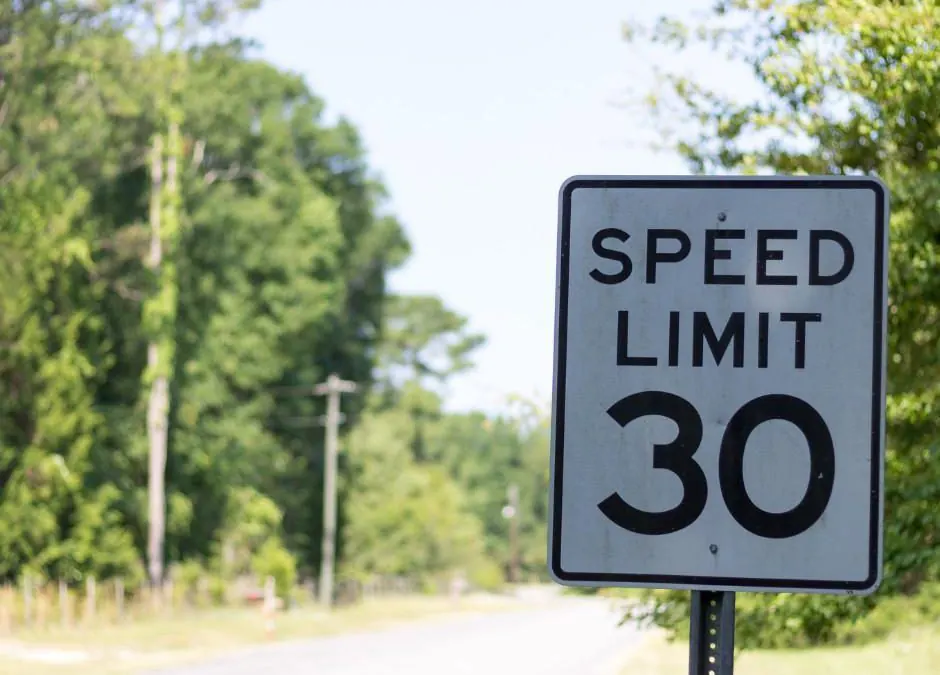
Common sense would tell us the faster a car moves at the time of an accident, the higher the possibility of severe injuries or even fatality. But what do those speeds even look like? The key factor in a car accident is how much a vehicle’s speed changes during the accident. Let’s say the speed only changes 1-10 mph, there is a 4.5% risk of injury and just a 1% risk of serious injury. However, should the change be 50 mph, the risk of injury jumps to 69%, and there’s a 52% chance of serious injury. Change this to a 70 mph speed change, the serious injury rate spikes, and the fatality rate approaches 100%.
How Do Slow Moving Cars Impact Accidents?
Research tells us vehicles both above and below the average speed have increased accident risk. But slow-moving vehicles do not have as much impact as one may think, as frustrating as they can be for many drivers! Further research reveals the increased risk of slow-moving vehicles is relatively minor, while the largest risk occurs with vehicles traveling faster than 15 mph more than the median speed.
When you are dealing with a single-vehicle accident, risks posed by slow-traveling cars all but disappear.
How Do Higher Speed Limits Impact Car Accident Fatalities?
Interesting fact for the day: The federal government set the national speed limit cap at 55 miles per hour in 1974. The states had to enact the speed limit laws or risk being hit by fines from the federal government. Twenty-one years later, in 1995, the National Maximum Speed Limit Law was appealed to allow states the right to set their own maximum speed limits.
The Insurance Institute for Highway Safety provides some insight related to car accidents and speed. In 2020, 29% of all crash fatalities (more than 11,000 deaths) occurred in speed-related crashes. High speeds make a crash more likely as it takes longer to slow down and stop. Yes, raising speed limits has led to more deaths. It is common for drivers to drive faster than the speed limit. So, if the speed limit rises, the driver will likely still go faster. As evidenced above, high speeds lead to more fatal crashes.
Drive Safe. Drive Smart. Reach Out to Genthe Law Firm When the Worst Happens
Genthe Law Firm urges all drivers to be cautious while driving and drive the speed limit. Should you be involved in a car accident as the result of someone else’s negligence or reckless driving, contact us today to learn about our Genthe Guarantee and how we can get you the compensation you deserve.