Who’s Liable When You’re Injured at a Texas Hotel or Airbnb?
Liability for guest injuries in Texas usually falls on the property owner or host – but only if they failed to fix or warn about a known danger.
The rules are not the same for hotels and short-term rentals like Airbnb. Different standards apply depending on who controls the property, how the injury happened, and whether proper safety steps were taken. Knowing these differences can help you decide whether you have a valid claim.
Overview of Premises Liability Law in Texas
Premises liability law in Texas decides when a property owner is legally responsible for injuries that happen on their property. These laws apply to both commercial spaces like hotels and private properties used for short-term rentals.
Guests are sorted into legal categories that determine the level of care owed:
- Invitee – Someone on the property for business purposes, such as a paying hotel or Airbnb guest. They’re owed the highest level of safety.
- Licensee – A social guest. They’re owed a moderate duty of care.
- Trespasser – Someone on the property without permission. The legal obligation here is limited.
A property owner can be held responsible if:
- A dangerous condition existed,
- They knew about it (or should have known),
- And they failed to repair or warn about it.
For example, a broken stairway, wet floor, or loose handrail could all create liability if left unaddressed. The law also considers whether the injured person had a right to be there and whether the hazard was obvious.
Hotel Liability for Guest Injuries in Texas
Hotels in Texas owe a high duty of care to their paying guests. This means they are expected to maintain safe conditions, inspect the property regularly, and address hazards promptly. When they don’t, they can be held legally responsible for resulting injuries.
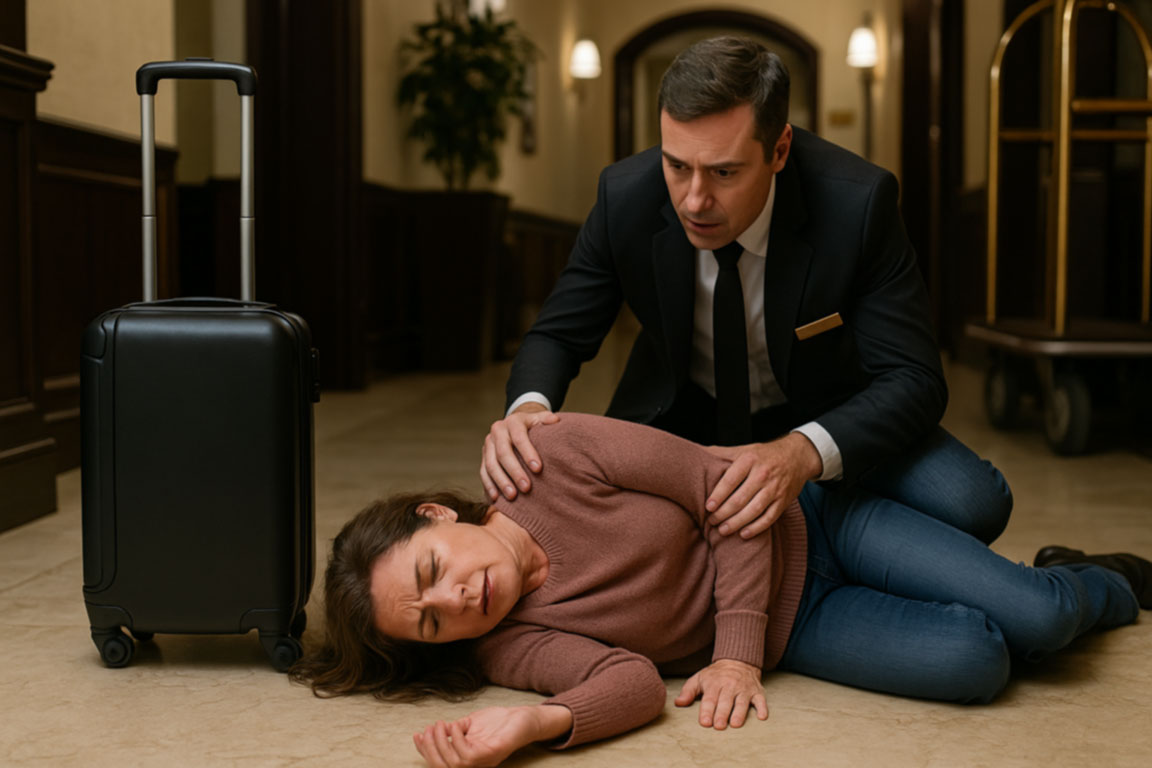
Common causes of hotel guest injuries include:
- Slippery floors with no warning signs
- Loose carpeting or tiles
- Faulty elevators or escalators
- Poor lighting in hallways or stairwells
- Broken furniture
- Inadequate security in parking lots or access points
The key legal question is whether the hotel knew (or should have known) about the danger. If they failed to act in a reasonable timeframe, they may be liable for damages.
Examples:
| Scenario | Hotel May Be Liable? |
|---|---|
| A guest slips on a recently mopped lobby floor with no sign | Yes |
| A guest trips over their own suitcase handle | No |
| A guest is assaulted in a poorly lit, unsecured stairwell | Yes |
| A guest ignores clear warnings about wet floors | No |
Hotels must also take reasonable steps to protect guests from third-party harm, such as theft or assault, especially in areas like parking garages or side entrances. When those measures are lacking, the hotel may be responsible for resulting harm.
Airbnb and Short-Term Rental Liability in Texas
Short-term rentals like Airbnb are treated differently than hotels under Texas law. These properties are often managed by individuals, not companies, and the level of care owed to guests can vary. Still, hosts must take reasonable steps to ensure guest safety.
Hazards that may lead to injury
- Loose or broken stairs
- Defective appliances or electrical wiring
- Inadequate lighting around entryways
- Missing or faulty smoke detectors
- Mold or pest problems
When a guest is injured due to unsafe conditions, the host may be liable if:
- They knew or should have known about the issue, and
- They failed to fix it or warn the guest in time.
Texas law still recognizes Airbnb guests as invitees when they’re paying customers. This means the host has a duty to address known risks or provide clear warnings. Failure to do so may lead to financial responsibility for medical costs, lost wages, and other harm.
Comparison of legal responsibilities
| Legal Factor | Hotel | Airbnb Host |
|---|---|---|
| Duty to Inspect | Frequent, often mandatory | Often informal or irregular |
| Safety Regulations | Subject to health and safety laws | May vary by local ordinance |
| Commercial Insurance | Usually required | Depends on host coverage |
| Risk Warnings Required | Yes | Yes, if hazard is known |
Since short-term rentals may lack formal inspection routines, injury claims often rely on whether the host had reason to know about the danger. When maintenance is neglected or known risks are hidden, liability becomes more likely.
When Is Airbnb Itself Responsible vs. the Host?
In most cases, Airbnb shifts legal responsibility to individual hosts by defining itself as a platform, not a lodging provider. But there are exceptions – especially when the platform’s own actions or policies contribute to a guest’s injury.
Airbnb may be held responsible when:
- It continues listing a property despite reports of dangerous conditions.
- It fails to remove a host with a known pattern of safety complaints.
- It provides misleading information about the property’s safety or condition.
Airbnb offers a Host Protection Insurance policy, which claims to cover up to $1 million in third-party injury or property damage claims. Still, this coverage does not guarantee payment. Airbnb may deny claims if it determines the incident falls outside its terms.
Example scenario:
A guest falls down stairs at a rental with no railing. Previous guests had flagged the hazard, and Airbnb was notified but took no action. In this case, both the host and Airbnb might face legal exposure – especially if the platform failed to act on known safety complaints.
While Airbnb may not be directly responsible in most cases, it can become part of a legal claim when it fails to act in a reasonable way after receiving notice of unsafe conditions.
Proving Negligence in Texas Injury Claims
To recover damages after an injury at a hotel or Airbnb in Texas, the injured guest must show that the property owner – or possibly Airbnb – was negligent. This means they must prove that someone failed to act with reasonable care and that this failure caused the injury.
Texas courts require proof of four specific elements:
- Duty – The owner or host had a legal obligation to maintain safe conditions.
- Breach – That obligation was not met.
- Causation – The unsafe condition caused the injury.
- Damages – The guest suffered actual harm, such as medical bills or lost income.
Texas follows a modified comparative negligence rule. This means that if the injured person is found to be more than 50% at fault for the incident, they cannot recover damages. If they are less than 51% responsible, any award will be reduced by their share of fault.
Checklist for proving a negligence claim
- Photos or video of the hazard
- Medical records and treatment notes
- Eyewitness statements
- Maintenance logs or prior complaints
- Any warnings – or lack thereof – provided at the property
A strong case will clearly link the hazard to the injury and show that the responsible party failed to take reasonable precautions.
What Compensation Can Injured Guests Receive?
When a guest is hurt due to unsafe conditions at a hotel or Airbnb in Texas, they may be entitled to recover financial compensation. The amount and type of damages will depend on how serious the injury is and how it affects the person’s life.
Types of compensation available
| Category | Description |
|---|---|
| Medical Costs | Emergency care, hospital bills, physical therapy |
| Lost Income | Missed work, reduced earning ability |
| Pain and Suffering | Physical pain, emotional distress |
| Property Damage | Broken personal belongings during the incident |
| Future Medical Needs | Ongoing treatment, surgeries, or rehabilitation |
There are generally no caps on personal injury damages in Texas, unless the case involves medical malpractice or a government entity. Courts look at the actual losses, as well as the long-term impact of the injury, to decide what the compensation should cover.
Guests should keep thorough records of all expenses and impacts related to the injury. This includes receipts, wage documentation, and notes about how the injury has affected daily life.
Steps to Take After an Injury at a Hotel or Airbnb in Texas
Taking the right steps immediately after an injury can protect your health and help support any future claim. Whether the incident occurred at a hotel or short-term rental, early action makes a difference.
Key steps to take:
- Get medical attention
Seek care right away – even if the injury seems minor. Delays can affect both your recovery and your claim. - Photograph the scene
Take clear photos or videos of the area where the injury happened. Include the hazard (e.g., wet floor, broken step) and any surrounding conditions. - Report the incident
Tell hotel staff or the Airbnb host about the injury. Make sure they document the report. If possible, request a copy. - Get witness information
If anyone saw what happened, collect their names and contact details. - Keep all receipts and records
Save medical bills, prescriptions, travel changes, and anything else related to the incident. - Avoid giving statements
Don’t admit fault or sign anything without reviewing it carefully. Be cautious when speaking with insurance companies or property representatives. - Consult a personal injury attorney
Especially in more serious cases, legal advice can help you understand your rights and protect your claim.
Acting quickly helps preserve evidence, avoids misunderstandings, and strengthens the legal position if a claim becomes necessary.
FAQs about Liability for Guest Injuries at Hotels and Airbnbs in Texas
Can I sue both the hotel and an employee if I’m injured on-site?
Yes, if the injury was caused by an employee’s actions during their work, both the employee and the hotel company may be named in the claim.
Is Airbnb ever responsible for injuries that happen on its platform?
In most cases, Airbnb avoids direct liability. But it may be held responsible if it failed to act after being notified about unsafe conditions or if it misrepresented a listing’s safety.
What if I signed a waiver or terms of service agreement before my stay?
Waivers may limit liability, but they are not always enforceable – especially if negligence or dangerous conditions are involved. Texas courts may still allow a claim if the property was unsafe.
Do I need to prove the property owner knew about the hazard?
Usually, yes. You’ll need to show that the owner knew or should have known about the danger and didn’t take reasonable steps to fix it or warn you.
What if I was partly at fault for the injury?
Texas follows a modified comparative fault rule. If you’re found to be 51% or more at fault, you can’t recover damages. If you’re less than 51% responsible, your award may be reduced.
Does Airbnb’s Host Protection Insurance cover my injuries?
It might, but it’s not guaranteed. Airbnb’s insurance has limitations and may deny claims that fall outside specific criteria.
How long do I have to file a personal injury claim in Texas?
The general time limit is two years from the date of the injury. Delaying beyond this period can prevent you from filing a lawsuit.
Can a guest sue for emotional distress alone?
Emotional distress claims typically need to be tied to physical injury or a severe incident. They’re harder to prove on their own.
Are hotels required to have security in Texas?
Hotels must take reasonable steps to provide a safe environment. Lack of adequate security may lead to liability if it contributes to an injury or assault.
Can I still file a claim if I was injured in a shared Airbnb space?
Yes. If the injury was caused by a dangerous condition in a common area, the host may still be responsible.
Call Aaron Genthe for Help with Hotel or Airbnb Injury Claims
If you or someone you love was hurt while staying at a Texas hotel or Airbnb, it’s important to understand your legal rights. Aaron Genthe of Genthe Law Firm in Dallas has experience handling injury cases involving property hazards, unsafe conditions, and negligent hosts.
Call (214) 957-0898 today for a free consultation and find out what steps you can take to protect your claim.
Page Contents
- Who’s Liable When You’re Injured at a Texas Hotel or Airbnb?
- Overview of Premises Liability Law in Texas
- Hotel Liability for Guest Injuries in Texas
- Airbnb and Short-Term Rental Liability in Texas
- When Is Airbnb Itself Responsible vs. the Host?
- Proving Negligence in Texas Injury Claims
- What Compensation Can Injured Guests Receive?
- Steps to Take After an Injury at a Hotel or Airbnb in Texas
- FAQs about Liability for Guest Injuries at Hotels and Airbnbs in Texas
- Call Aaron Genthe for Help with Hotel or Airbnb Injury Claims