
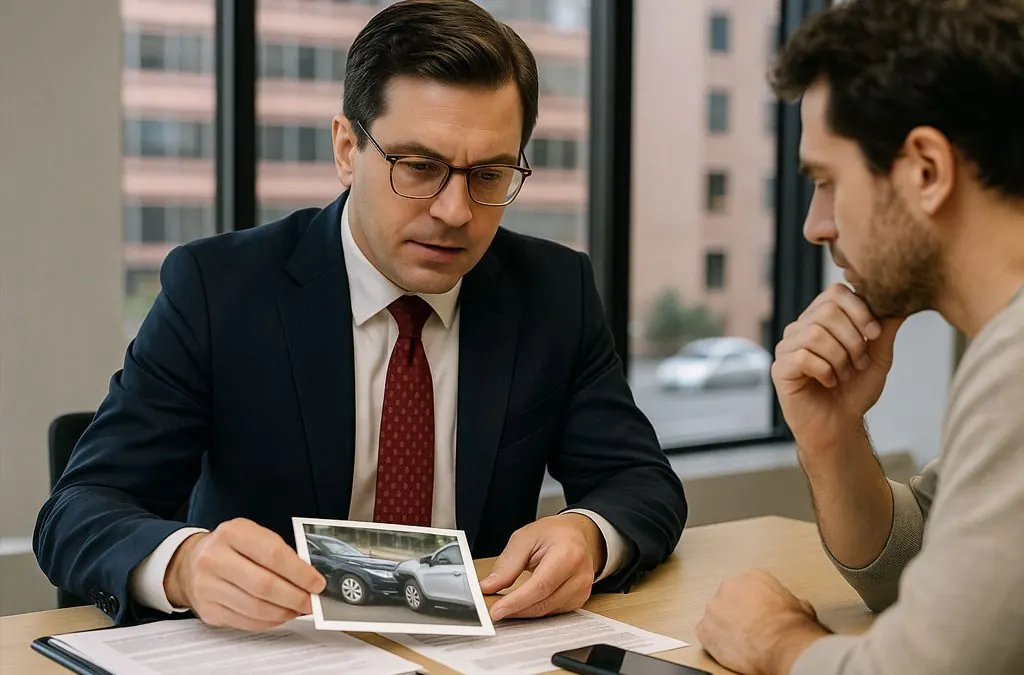
The Evidence Every Injury Victim Should Collect After an Accident
When someone calls our office after a crash, my first thought is, “I hope they kept their records.”
Why? Because I’ve seen too many otherwise strong cases fall apart due to missing evidence. Maybe there are no photos of the damage. Maybe they never went to the ER. Maybe they thought their soreness would go away – and now the insurance company is questioning everything.
Here’s the reality: most people don’t know what to document after an accident. And by the time they reach out for legal help, some of the most valuable evidence is already gone.
This guide covers what I wish every client knew right away – what to photograph, track, and save, and how each piece of information could protect your injury claim. If you’re reading this before contacting a lawyer, you’re ahead of the game.
Why This Evidence Matters More Than You Think
If you’ve been in a car accident and you’re thinking about filing a personal injury claim, you need more than just a story about what happened – you need proof. That means solid, well-documented evidence that shows:
- Who caused the accident
- How badly you were hurt
- What the crash cost you in medical bills, income, and everyday life
Texas uses a modified comparative fault system. That means if you’re even partially blamed for the crash, your compensation can be reduced – or denied altogether if you’re found more than 50% at fault. So, it’s not just about telling your side. It’s about proving it.
Here’s what I tell every client: evidence is your best defense against doubt and delay. Insurance companies are trained to minimize claims. They’ll comb through every gap in your story, every missing receipt, every vague medical note, and every photo you didn’t take.
When you have detailed, consistent records from day one, you take away their excuses to deny your claim.
What strong evidence helps prove:
- The other driver was negligent
- Your injuries came from the crash – not something else
- Your pain and losses are real, documented, and worth full compensation
If you don’t have this kind of proof, the insurance company will act like your pain doesn’t count. That’s the fight I try to prevent – by showing clients what to gather before it becomes an uphill battle.
The First 10 Minutes – What to Do at the Scene
The moments right after a crash are chaotic. Your adrenaline is pumping, your heart is racing, and you’re probably trying to figure out what just happened. But if you’re physically able – and safe – what you do in the first 10 minutes can be the difference between a strong claim and a frustrating legal battle.
This is what I wish every client could do before leaving the scene:
1. Take Photos – Lots of Them
- Get wide shots of the full scene, including vehicle positions and traffic signs
- Take close-ups of all vehicle damage – your car, theirs, anything that looks off
- Photograph skid marks, debris, road conditions, and license plates
- Don’t forget to snap your visible injuries, even if they seem minor
You don’t need a fancy camera. Your phone is enough – just be thorough. The more, the better.
2. Get Witness Info (Don’t Assume Police Will)
- Ask anyone who saw the crash to give you their name and phone number
- If they’re in a hurry, ask if they’re willing to send a quick text summary
- This matters when fault is disputed – witness statements can tip the scale
Police don’t always gather full witness details. If you wait until the report is filed, those people may be gone and impossible to track down.
3. Talk to the Responding Officer
- Ask for their name, badge number, and report number
- If you’re unsure about anything later, this makes it easier to get follow-up info
- If you’re hurt, tell the officer – even if it feels minor
(Delayed pain is real, and your initial statement matters)
4. Write Down How You Feel
Adrenaline can mask pain. If you have stiffness, soreness, dizziness, or feel “off,” write it down or record a quick voice memo. I can’t tell you how many people said they were “fine” at the scene, only to be in the ER 12 hours later – and the insurance company used that against them.
Medical Proof That Tells the Full Story
If there’s one kind of evidence that personal injury cases live or die on, it’s medical records. I’ve had clients with major injuries who almost lost their claim – not because they weren’t hurt, but because they didn’t document it properly.
Here’s what I always advise: get checked out, get treated, and keep everything.
1. Get Medical Care Immediately
Even if you don’t go by ambulance, go to the ER or urgent care the same day. Delaying care – even by a day or two – gives the insurance company an opening to say, “You must not have been seriously injured.”
If you’re stiff, sore, dizzy, or just feel “off,” that’s enough reason to get evaluated.
2. Stick to Your Treatment Plan
Follow up with your doctor. Go to your physical therapy appointments. Take your prescriptions. Why? Because consistent care shows that your injury is real and ongoing. Gaps in treatment – even short ones – will be used against you.
3. What to Save
I recommend clients keep a folder (or even better, scan into cloud storage) of:
- ER or urgent care discharge papers
- Diagnostic reports (X-rays, CT scans, MRIs)
- Visit summaries from each provider
- Physical therapy logs and home exercise instructions
- Prescription receipts
- Any medical restrictions or work notes from doctors
If you’re out of work or your injury limits your movement, ask your doctor to put that in writing.
4. Start a Recovery Journal
Write down your symptoms each day, your pain levels, your limitations, and any activities you’ve had to skip. Over time, this becomes a powerful record – especially when insurance companies try to argue that you “healed fast” or “seemed fine.”
Medical evidence tells the story of your injury – but it only works if the story is detailed, consistent, and well-documented from the beginning.
Everyday Records That Prove Financial and Lifestyle Impact
When people think of injury claims, they usually focus on medical bills. But that’s just one piece. What truly brings a case to life – and helps increase the value – are the day-to-day records that show how the injury has affected your work, your finances, and your routines.
These “non-medical” records often fill in the gaps and prove what a simple X-ray or doctor’s note can’t.
1. Lost Wages and Employment Impact
If you’ve missed work – even part-time shifts or freelance gigs – document it. Ask your employer to provide:
- A letter confirming the days or hours you missed
- Any accommodations or modified duties made for your injury
- Notes on how your role or income changed as a result
For self-employed people, keep track of lost jobs, canceled contracts, or revenue drops. Tax records, invoices, or client emails can help.
2. Receipts and Out-of-Pocket Costs
These add up fast, and they’re recoverable in many claims:
- Over-the-counter medications
- Medical equipment (braces, ice packs, crutches)
- Gas or rideshare to and from appointments
- Childcare or household help while recovering
Keep every receipt. If it was caused by the crash, it’s likely relevant.
3. Lifestyle Limitations
You don’t need a doctor’s note to prove that you can’t mow the lawn, pick up your kids, or walk your dog. Just start documenting it:
- Keep a log of tasks you’ve had to give up or pay for
- Make notes about family events you missed due to pain or appointments
- Record how daily life has changed, even in small ways
These aren’t exaggerations – they’re real-world effects. And when your case is reviewed, these details help show the true cost of your injury beyond the hospital bills.
Photos, Footage, and Digital Data We Can’t Get Later
Some of the strongest evidence in an auto accident case is the kind that disappears fast – and once it’s gone, we usually can’t get it back. That’s why I always ask early on: “Do you have any dashcam footage? Any surveillance cameras nearby? Did anyone record anything on their phone?”
This kind of digital proof can make a huge difference – but only if it’s saved quickly and securely.
1. Dashcam Footage
If your vehicle (or someone else’s) had a dashcam running:
- Save the footage to another device ASAP – many cameras overwrite automatically every 24–72 hours
- Email a copy to yourself or your attorney to preserve the timestamp
- Don’t assume law enforcement will collect or request it unless there’s a fatality or criminal charge involved
Dashcams can show lane changes, brake timing, impact speed, or traffic violations that are hard to reconstruct later.
2. Surveillance or Business Cameras
If your crash happened near a store, gas station, office building, or apartment complex, those locations may have exterior video. But here’s the catch:
- Most systems delete or overwrite within days
- You need to act fast and request the footage (or have your lawyer send a formal preservation letter)
- Businesses are not legally required to turn over footage unless subpoenaed – but many will if asked quickly and respectfully
A five-second clip could prove fault better than any witness statement.
3. Smartphone and App Data
Phones can store evidence you didn’t even think about:
- Your own photos and videos (back them up in case your phone gets damaged)
- GPS logs from apps like Google Maps, Uber, DoorDash, or Waze
- Health data showing steps, movement patterns, or impact detection on smartwatches
This type of evidence can back up your timeline, prove location, and help refute claims that “you weren’t really hurt.”
If in doubt – save it. We can decide later what’s relevant. But once it’s erased or overwritten, it’s gone for good.
Why a Lawyer Helps Protect and Strengthen Your Evidence
People often think lawyers are just there to argue – but in personal injury cases, one of the most important things I do is protect evidence. The sooner I’m involved, the more I can help preserve what matters and keep your case from falling apart before it begins.
1. Preservation Letters Stop Evidence from Being “Lost”
If we know there’s dashcam footage, surveillance video, or vehicle data involved, I send a formal preservation letter. This legally notifies the other party – whether it’s a business, trucking company, or property owner – that they’re required to keep that evidence. Without that letter? It may get deleted “by routine.”
2. We Know What to Look For (and Where to Get It)
Most people don’t realize that evidence exists outside the crash scene. I’ve had cases where we pulled:
- GPS data from commercial delivery apps
- Security footage from apartment buildings blocks away
- Maintenance records from rental cars
- Employment files that proved how the injury impacted job duties
Unless someone knows to ask – and knows where to look – that evidence is often missed entirely.
3. We Present Evidence the Right Way
It’s not just what you collect – it’s how you use it. A photo, journal entry, or witness statement can be powerful… or useless. I make sure your evidence is:
- Organized
- Time-stamped
- Verified
- Legally admissible
That’s how we build credibility – and why well-documented claims are harder to deny or delay.
If you’ve already collected some of what I’ve covered, you’re ahead of the game. But if you’re overwhelmed or unsure what to do next, that’s where I step in.
FAQs We Get from Clients About Accident Evidence
What if I forgot to take pictures at the scene?
Don’t panic – it happens all the time. We can often get photos of the damage from tow yards, auto repair shops, or insurance adjusters. If there were nearby businesses or homes, we may also be able to request surveillance footage.
Can I still file a claim if I didn’t go to the ER right away?
Yes – but the longer the delay, the harder the fight. The insurance company will argue your injuries weren’t serious or weren’t caused by the crash. Go now, get checked, and let your doctor know the pain started after the accident.
Do I really need to keep every receipt?
Yes. Every dollar you spend related to the crash can be part of your claim – and it adds up quickly. Keep a simple envelope, folder, or digital scan of all receipts and documents until the case is resolved.
Can social media hurt my claim?
Absolutely. Even harmless posts or photos can be twisted. I’ve seen insurers use vacation photos, gym check-ins, or comments from friends to suggest someone wasn’t really injured. Best advice: stay off social media while your case is active.
How long should I keep all this stuff?
At least until your case is completely closed – and ideally for a year or two afterward. I keep secure digital backups for my clients, but having your own copies is smart too.
Need Help from Experienced Dallas Car Crash Lawyers?
If you’ve been hurt in a car accident and aren’t sure what to do next – or what the insurance company isn’t telling you – the Dallas car crash lawyers at Genthe Law Firm are ready to help. We know how to secure the evidence you need, protect your rights, and fight for the compensation you deserve.
Call (214) 957-0898 today for a free consultation.