Timeline of a Texas Personal Injury Lawsuit
“How long is this going to take?”
It’s the very first question most people ask after getting hurt – and it’s an important one. If you’re recovering from an accident, medical bills are piling up, you’re missing work, and your life feels completely upended, you want answers. So here it is:
Most personal injury cases in Texas settle within 6 to 18 months.
But that’s just a range. Some cases wrap up in a few weeks. Others take much longer, especially if the injury is serious, the insurance company is pushing back, or the case goes to trial.
The reason? No two cases are the same. Your timeline depends on things like how long your medical treatment takes, whether the other side admits fault, and how quickly records and evidence can be collected. In this article, you’ll get a breakdown of the full process – from treatment to trial – so you’ll know what to expect, where delays usually happen, and how a good lawyer keeps your case moving.
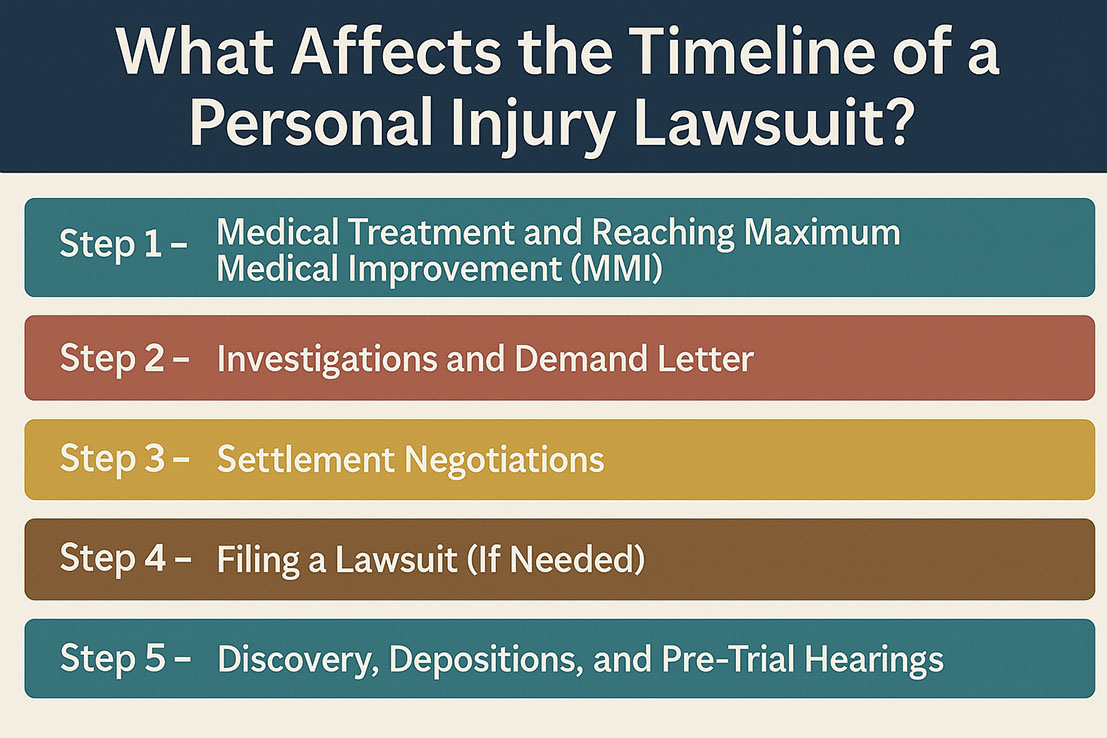
What Affects the Timeline of a Personal Injury Lawsuit?
There’s no universal clock for personal injury cases – some resolve in a matter of months, others take years. The timeline depends on several moving parts, and many of them are out of your control. But knowing what those variables are can help you manage expectations and avoid surprises.
1. Medical Treatment and Recovery Time
This is often the biggest factor. If your injuries require surgery, physical therapy, or long-term monitoring, your case won’t move forward until you’ve recovered – or reached what doctors call Maximum Medical Improvement (MMI).
2. Disputes Over Fault or Damages
If the other party accepts responsibility and the damages are straightforward, things move quickly. But if liability is denied or the insurance company questions the severity of your injuries, expect delays as your lawyer gathers more evidence.
3. Cooperation from the Insurance Company
Some insurers act quickly. Others drag their feet, deny claims unfairly, or make lowball offers to test whether you’ll settle out of frustration. Your attorney can push back and keep pressure on them, but it may still take time.
4. Whether a Lawsuit Is Filed
Not all cases go to court – but if yours does, court deadlines, motions, and hearings add several months to the process. In some cases, filing a lawsuit is what finally gets the insurance company to take your claim seriously.
5. Court Scheduling and Local Backlog
Some Texas counties are busier than others. If your case goes to trial, you might wait months for a court date, even after discovery is complete.
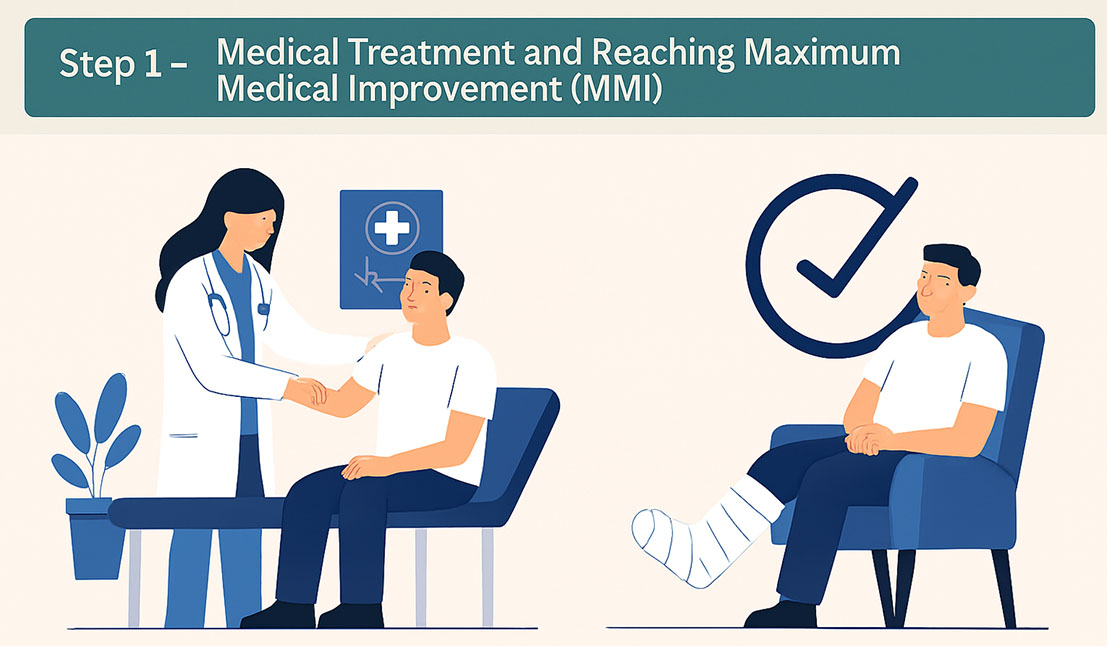
Step 1 – Medical Treatment and Reaching Maximum Medical Improvement (MMI)
No matter how strong your case is legally, it doesn’t begin in full until your medical situation is stable. That’s why the first – and sometimes longest – phase of a personal injury lawsuit is focused entirely on your health.
Why MMI matters so much
Maximum Medical Improvement (MMI) means your doctor believes your condition has improved as much as it reasonably can – even if you’re not fully healed. Reaching MMI is critical because:
- It helps determine the long-term impact of your injury
- It shows whether you’ll need ongoing care, therapy, or surgery
- It allows your lawyer to accurately calculate your damages, including future costs
If you settle before reaching MMI, you risk accepting a payout that doesn’t cover future complications or treatments you didn’t know you’d need.
Timeline depends on injury type
Every injury – and every recovery – is different. Some clients reach MMI in weeks. Others take a year or longer, especially if surgery is involved or symptoms are slow to resolve.
Average recovery timelines:
- Minor soft tissue injuries: 1 to 3 months
- Moderate injuries (e.g., fractures): 3 to 6 months
- Serious injuries (e.g., spinal damage, surgeries): 6 months to 1 year or more
Your lawyer may check in regularly with your doctors or request updated records as your treatment progresses. But until your injuries stabilize, it’s usually too early to begin negotiating your case’s value.
Step 2 – Investigation and Demand Letter
Once you’ve reached MMI – or are close to it – your attorney shifts focus from recovery to building your claim. This stage is about gathering proof, calculating damages, and setting the stage for negotiations.

What your lawyer does in this phase:
- Collects all medical records and billing statements
- Obtains police reports, witness statements, or incident photos
- Reviews lost wages and employment records
- Analyzes long-term impact, including any disability or future care needs
This information forms the foundation of your demand letter – a detailed document sent to the at-fault party’s insurance company outlining:
- What happened
- Why the insured is at fault
- What your injuries cost you (financially and emotionally)
- The total compensation you are seeking
It’s not just a letter – it’s the opening move in your case. It shows the insurer you’re serious and gives them a chance to settle before a lawsuit is filed.
How long this takes:
- Gathering all documentation can take 2 to 6 weeks, depending on how fast providers respond
- Drafting and reviewing the demand usually takes 1 to 2 weeks
- The insurer typically responds within 30 to 60 days, though some delay or request additional information
This step sets the tone. A strong, clear demand with documented damages often leads to faster settlements – or signals that it’s time to file suit.
Step 3 – Settlement Negotiations
Once the demand letter is delivered, the insurance company will evaluate your claim and respond. This begins the negotiation phase, where the goal is to reach a fair settlement without filing a lawsuit. In many cases, this is where the case ends – but it can also be the beginning of a longer battle.

What to expect from the insurer’s response:
- Initial offer: Often lower than your damages warrant. It’s a starting point, not the final word.
- Negotiation back and forth: Your attorney counters, provides further documentation, and challenges any lowball tactics.
- Final offer: If both sides agree, the case can settle without a lawsuit.
Insurers will often test whether you’re willing to wait for a better offer or accept less just to be done. That’s why having an attorney handle this process matters – they know how to push for full value.
How long does negotiation take?
- Some cases settle within weeks of the demand if liability is clear and damages are well-documented.
- Other negotiations can stretch over several months, especially if:
- The injury is complex
- Multiple parties are involved
- The insurer is slow to respond or contesting key facts
Pro tip: Mediation can speed things up. If both parties are close to agreement but stuck on numbers, a mediator (neutral third party) can help resolve the case in one session.
Even during negotiation, your lawyer may prepare the case for litigation – in case talks break down and a lawsuit becomes necessary.
Step 4 – Filing a Lawsuit (If Needed)
Not every case settles through negotiation. If the insurance company refuses to make a reasonable offer – or denies liability altogether – your attorney may recommend filing a formal lawsuit in civil court. This doesn’t mean you’re going to trial, but it does change the pace and structure of your case.

When and why to file
You may file a lawsuit if:
- The insurer won’t budge after multiple offers
- The at-fault party disputes liability
- Your damages are significant and need to be preserved in court
- You’re approaching the legal deadline to sue
In Texas, the statute of limitations for most personal injury cases is 2 years from the date of the injury. Filing before this deadline preserves your right to recover damages.
What happens after filing
- A petition is filed in court outlining your case
- The defendant (the at-fault party) is served with legal papers
- They have a deadline (usually 20 days) to file a response
- The court issues a scheduling order that outlines key deadlines and sets a tentative trial date
Filing a lawsuit also sends a message: you’re not backing down. In many cases, just filing can bring insurers back to the table with a more serious settlement offer.
How long this takes:
- Filing and service: 1 to 4 weeks
- Defendant’s response: 20 to 30 days
- Pre-trial schedule begins once court accepts the case
Once a lawsuit is filed, your case enters the discovery phase – and timelines become governed by court rules.
Step 5 – Discovery, Depositions, and Pre-Trial Hearings
Once the lawsuit is filed, both sides enter the discovery phase – where they exchange information, gather evidence, and prepare for trial. This stage is often the longest part of a personal injury lawsuit, but it’s also where the real leverage is built.

What happens during discovery:
- Written discovery: Each side sends formal questions (interrogatories) and document requests
- Depositions: Witnesses, the plaintiff (you), the defendant, and sometimes experts are interviewed under oath and on record
- Expert disclosures: Both sides identify and share opinions from doctors, economists, or engineers
- Medical exams: The defense may request an independent medical examination (IME)
This phase is where weak cases fall apart – or strong ones become undeniable. It’s also where many lawsuits are resolved through late-stage settlement talks, especially if depositions reveal damaging facts.
Pre-trial hearings and motions
As discovery unfolds, there may be several court hearings to:
- Set deadlines
- Resolve disputes over evidence
- Rule on motions (e.g., to dismiss parts of the case or exclude testimony)
These hearings are scheduled based on the court’s availability, which means progress can be slow in busy counties.
How long discovery takes:
- 3 to 9 months is common, but some complex cases take longer
- Delays may occur if there are disputes over evidence or scheduling conflicts for depositions
Although the court sets deadlines, attorneys can agree to extend them – which can help with preparation but may stretch the timeline.
Step 6 – Trial or Final Settlement
Most personal injury cases never reach the courtroom. In fact, the majority settle somewhere between the end of discovery and the scheduled trial date – often because both sides now have a clear view of the evidence, the injuries, and the potential risks of going to trial.
Final settlement before trial
Late-stage negotiations may heat up:
- After depositions expose key facts
- Once expert reports are exchanged
- Right before trial, when pressure is highest for both sides
Your attorney may recommend settlement if the offer is fair and you want to avoid the time, stress, and uncertainty of trial. But if the insurer won’t meet reasonable terms, trial is the next step.
What to expect at trial
- A jury or judge will hear your case
- Witnesses and experts testify
- Lawyers present evidence and arguments
- A verdict is issued, deciding fault and awarding damages if applicable
Trial duration:
- 1 to 5 days for most personal injury trials
- Larger or more complex cases can take longer
When you get paid
If you win at trial or settle before it begins:
- Payouts typically arrive within 30 to 60 days
- If an appeal is filed, payment may be delayed
- Some clients choose structured settlements for long-term financial support
Even if your case doesn’t go to trial, being ready to try the case is often what motivates insurers to finally make a serious offer.
FAQs About Personal Injury Lawsuit Timelines in Texas
What’s the fastest a personal injury case can settle?
If liability is clear and injuries are minor, some cases settle in 3 to 6 months. This usually applies to soft tissue injuries with short treatment periods and no major disputes.
What takes the longest in a lawsuit?
Two key delays: ongoing medical treatment (you can’t settle until you know the full extent of your injuries), and court scheduling (especially if your case goes into litigation).
Do all cases go to trial?
No. The vast majority – over 90% – settle before trial. But preparing your case as if it will go to court often results in a stronger settlement offer.
Can I do anything to speed up my case?
Yes – complete your medical treatment promptly, follow your doctor’s orders, and stay in touch with your lawyer. But much of the timing depends on the insurance company, court calendars, and how quickly other parties cooperate.
Why does it matter if I reach MMI before settling?
If you settle before reaching MMI, you might miss out on compensation for future treatments or disability. Once you accept a settlement, it’s final – even if your condition worsens later.
What to Do If You’re Waiting on a Personal Injury Settlement in Texas
If you’re injured, out of work, and waiting for answers, the last thing you want is a legal process that drags on. The team at Genthe Law Firm can help you understand what’s slowing your case, what can be done to move it forward, and how to fight for a fair result – without unnecessary delays.
Call (214) 957-0898 for a free consultation and case evaluation.
Page Contents
- Timeline of a Texas Personal Injury Lawsuit
- What Affects the Timeline of a Personal Injury Lawsuit?
- Step 1 – Medical Treatment and Reaching Maximum Medical Improvement (MMI)
- Step 2 – Investigation and Demand Letter
- Step 3 – Settlement Negotiations
- Step 4 – Filing a Lawsuit (If Needed)
- Step 5 – Discovery, Depositions, and Pre-Trial Hearings
- Step 6 – Trial or Final Settlement
- FAQs About Personal Injury Lawsuit Timelines in Texas
- What to Do If You’re Waiting on a Personal Injury Settlement in Texas